Nash Ambassador
Nash's unibody flagship — home to the "Airflyte" streamlined styling and reclining "twin bed" seats that were years ahead of the industry.
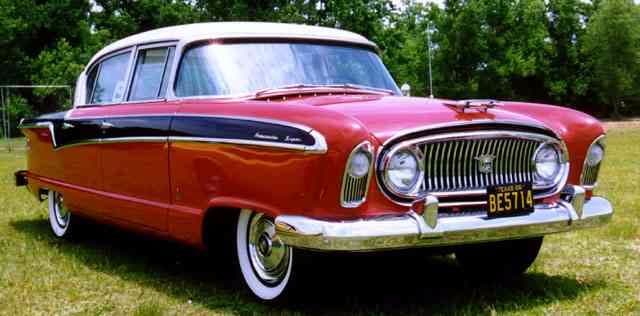
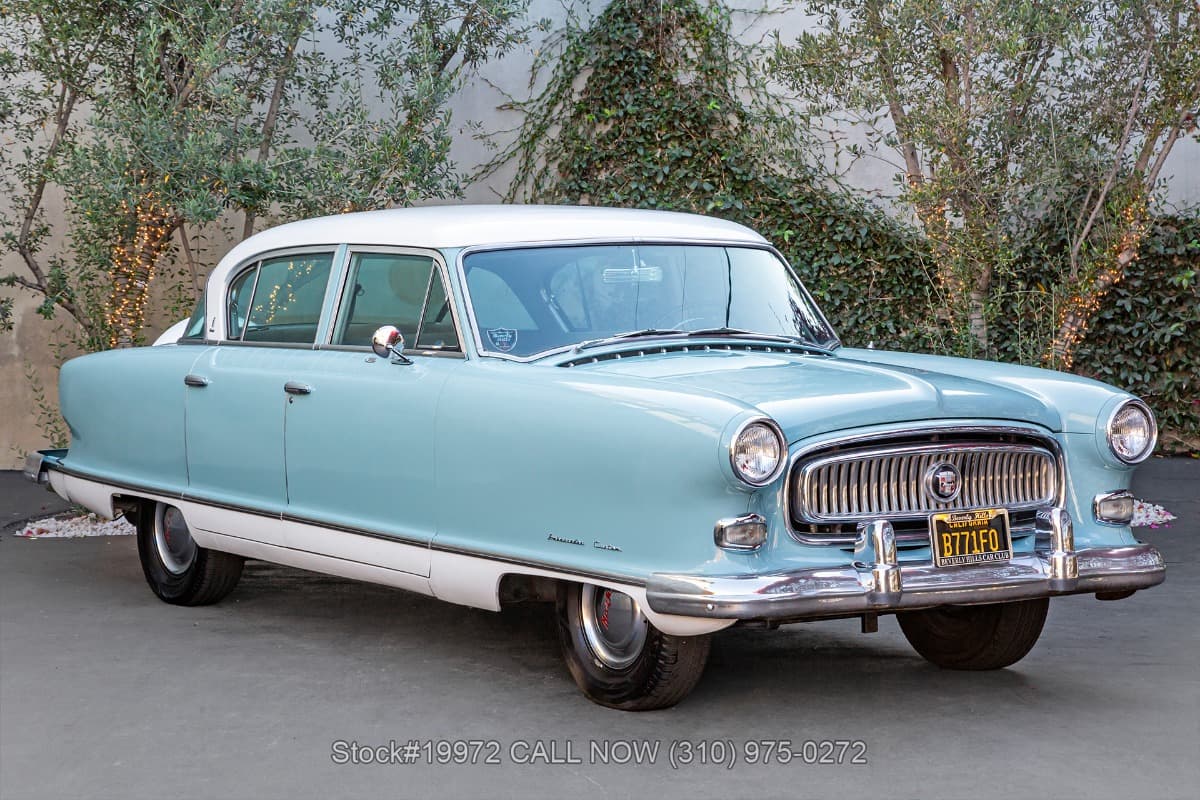
Redesigned for 1949 with dramatically rounded "Airflyte" bodywork and genuine unibody construction — unusual for a full-size American car of the era — the Ambassador served as Nash's senior line through the company's final years as an independent automaker and into the early AMC merger period. Its combination of aerodynamic styling, class-leading fuel economy for its size, and genuinely novel features like reclining front seats that folded into a bed gave it a distinct identity against bigger, more conventional Big Three rivals.
History
The 1949 Airflyte redesign wrapped the Ambassador in smooth, enclosed-wheel bodywork designed with aerodynamics in mind — a genuinely unusual priority for an American manufacturer at the time, and one that gave the car real fuel economy advantages over its rivals.
Nash marketed the reclining front seats — which folded flat to create a usable bed — as a genuine selling point, alongside full unit-body construction that Nash had adopted years before most competitors made the same switch.
Following the 1954 merger with Hudson to form American Motors, the Ambassador continued as Nash's senior model through 1957, by which point it shared its bodyshell with the Hudson Hornet under AMC's consolidated platform strategy before the Nash and Hudson names were both retired.
Notable Versions
1949–51 Airflyte
The original enclosed-wheel streamlined design, the most distinctive and recognizable Ambassador styling era.
1955–56 Packard V8 cars
Nash sourced Packard V8 engines during the early AMC years before developing its own — a genuine curiosity of the merger period.
1957 Ambassador
The final Nash-badged Ambassador before the name moved fully under the AMC banner and the Nash marque was retired.
What to Look for When Buying
Key inspection points from experienced collectors.
Unibody rust is a structural concern, not just cosmetic
Like other unibody cars of the era, rust in the Ambassador's structure directly affects safety and integrity — inspect thoroughly.
Packard-sourced V8 parts availability varies
The 1955–56 Packard-engine cars require parts knowledge specific to that era's Nash-Packard relationship — confirm a seller or mechanic understands the combination.
Verify reclining seat mechanism function if present
A genuine period feature that adds interest and value — confirm it still operates as designed.
Inspect enclosed front wheel wells for rust and debris buildup
The Airflyte's distinctive covered front wheels trap moisture and debris more than open wheel wells — a common rust location specific to this design.
Parts and trim are genuinely scarce compared to Big Three cars
Nash's smaller production volume and the marque's 1957 discontinuation make sourcing replacement parts more work than for a contemporary Ford or Chevrolet.
Quick Specs
- Engine
- 234 cu in I6; 250–327 cu in Packard/AMC V8 (1955+)
- Horsepower
- 112 hp (I6) – 255 hp (327 V8, 1957)
- Wheelbase
- 121.25 in
- Weight
- approx. 3,400–3,700 lbs
- Transmission
- 3-speed manual (overdrive optional); Hydra-Matic automatic optional
- 0–60
- approx. 12–14 seconds (I6)
Market Price Guide
Approximate USA asking prices
Shop Parts
Find Nash Ambassador parts on eBay
Shop on eBay →We may earn a referral fee if you make a purchase through this link, at no additional cost to you. Learn more
Nash Ambassador For Sale
2 listings currently available