Ford Mustang
The original pony car — sold 400,000 units in its first year and never looked back.
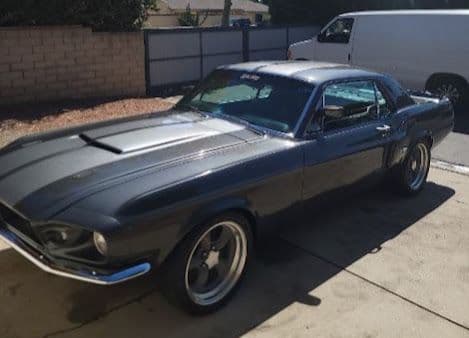
The Mustang debuted April 17, 1964 and immediately defined a new automotive segment. The first-generation car (1964½–1970) is the most collectible, with Shelby GT350 and GT500 variants commanding six-figure prices. The Boss 302 and Boss 429 from 1969–70 are among the most dramatic factory performance cars of the era.
History
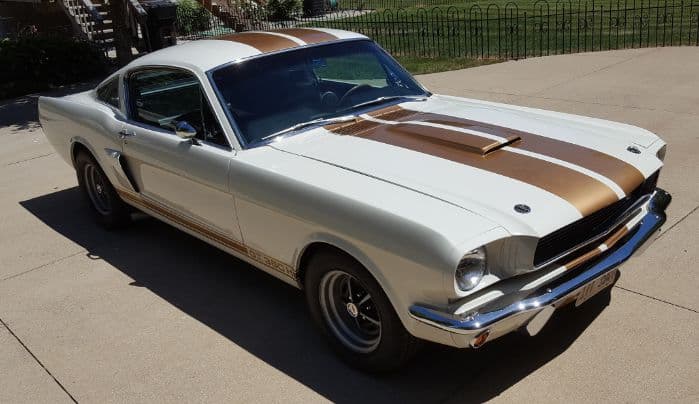
Lee Iacocca championed the Mustang as a sporty, affordable car aimed at the baby boom generation. The '1964½' debut cars are technically early 1965 models (distinguished by generator versus alternator). The 1964–68 'classic' Mustangs represent the purest pony car concept. Carroll Shelby transformed the GT350 into a genuine road racer and the GT500 into a boulevard bruiser with the 428 Cobra Jet.
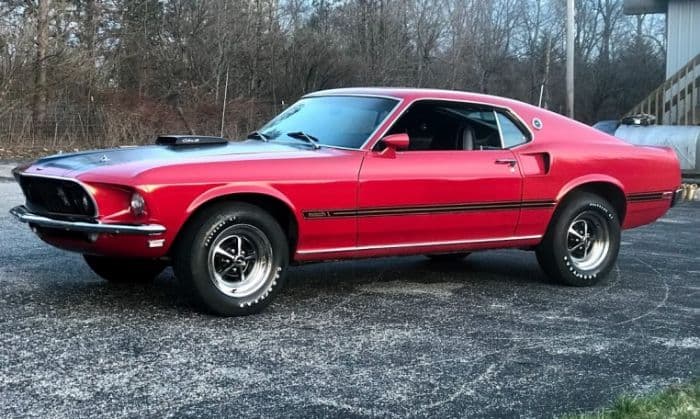
The 1969–70 SportsRoof fastback — particularly in Boss 302 and Boss 429 form — is perhaps the most visually aggressive first-gen design. The Boss 302 was built to homologate for Trans-Am racing; the Boss 429 used a NASCAR-spec engine shoe-horned into the engine bay by hand. The 1971–73 Mustang grew substantially larger and heavier, a direction the market rejected. Collectors strongly prefer the 1964–70 cars.
Notable Versions
Shelby GT350 (1965–66)
289 Hi-Po with 271 hp, race-bred suspension, fiberglass components. Built by Carroll Shelby in San Jose, CA.
Shelby GT500 (1967–70)
428 Cobra Jet, 335 hp (underrated). The ultimate factory Mustang.
Boss 302 (1969–70)
302 V8, 290 hp (underrated). Homologated for Trans-Am racing — one of the best-handling first-gen Mustangs.
Boss 429 (1969–70)
NASCAR-spec 429 engine hand-fitted into a widened engine bay. Fewer than 2,000 per year, extremely collectible.
Mach 1 (1969–73)
SportsRoof fastback with performance trim and engine options up to the 428 CJ.
What to Look for When Buying
Key inspection points from experienced collectors.
Mustangs are the most-cloned muscle car
Demand a Marti Report (Ford's production data service). It documents every factory option and is essential for authentication.
Convertible rust is predictable
Rear quarter rust-out behind the wheel arches and the convertible top well are the primary structural issues on open cars.
Big-block front suspension wear
1967–68 390/428 cars put heavy weight on the front suspension. Inspect steering, ball joints, and shock towers carefully.
Shelby clones vastly outnumber real cars
More Shelby Mustangs exist today than were built. Use the Shelby American Automobile Club (SAAC) registry.
Torque box rust is common
The front frame reinforcements (torque boxes) rust and crack. A collapsed torque box is a significant structural repair.
Quick Specs
- Engine options
- 170–250 I6, 260–428 CJ, 429 V8
- Horsepower
- 101–375 hp factory; Shelby variants higher
- Wheelbase
- 108 in
- Transmission
- 3/4-spd manual, Ford-O-Matic, C4/C6 auto
- 0–60 (428 CJ)
- approx. 5.5 seconds
Market Price Guide
Approximate USA asking prices
Shop Parts
Find Ford Mustang parts on eBay
Shop on eBay →We may earn a referral fee if you make a purchase through this link, at no additional cost to you. Learn more
Ford Mustang For Sale
62 listings currently available